 |
MATH 4/543 - Ordinary Diff Eqs - Spring 2009 E-companion site: http://www.uccs.edu/~online/login.htm |
 |
|
Syllabus |
Instructor: Dr. Radu C. Cascaval http://www.uccs.edu/~rcascava [email protected] |
Office: Eng 271 Phone: 719-255-3759 Fax: 719-255-3605 |
|
Course description: The lectures will cover the following topics: first-order (nonlinear) equations, planar linear systems and phase portraits, nonlinear systems, existence and uniqueness, equilibria, stability, asymptotic behavior, Poincare-Bendixson theorem, applications in biology, mechanics, chaos in continuous and discrete dynamical systems. The course has an E-companion website for access to grades throughout the semester, links to handouts and other important announcements.
Homework: Weekly sets of homework problems from the textbook will be assigned, with due date on Wednesdays, unless otherwise specified. No late homework will be accepted or graded. Homework will be usually returned during the next class meeting and grades will be posted online. Each set will be worth 10 points and the lowest HMW grade will be dropped.
Exams: There will be 2 midterm Exams during the semester and a comprehensive Final Exam, scheduled as follows
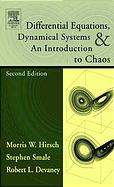

Homework: Weekly sets of homework problems from the textbook will be assigned, with due date on Wednesdays, unless otherwise specified. No late homework will be accepted or graded. Homework will be usually returned during the next class meeting and grades will be posted online. Each set will be worth 10 points and the lowest HMW grade will be dropped.
Exams: There will be 2 midterm Exams during the semester and a comprehensive Final Exam, scheduled as follows
Exam 1: Wed, March 4
Exam 2: Wed, April 15
Final Exam: Mon, May 18 (1:40-4:10pm)
Computational Tools: During the lectures, the instructor will introduce some of the computational tools that are relevant for differential equations applications, in particular MATLAB. No prior experience with MATLAB is required. MATLAB is installed on the computers in EN 136 and EN 233. Remote access to MATLAB is available for all current UCCS students. See instructions on the resources page.
Grading: The course grade will be based on the cumulative score from homework (100 pts), the two exams (100 pts each) and the final (200 pts). Students earning Math 543 credit will be required to work on a project and submit a final project report (worth 100 points). Topics for the projects will be described in class. 60% of the maximum total score of 500 (600 for Math 543) guarantees a passing score in the class.
Other policies: To make the most of your class, you are required to attend every class session. Students should notify (in advance) the instructor if they need to miss more than one session (with the exception of MathOnline students). Supporting documentation may be required. For other course policies, such as the use of scientific calculators, consult the "Departmental Policies" link on the Math department web site http://www.uccs.edu/math. Drop dates: Please seek counseling from the Dean's office before dropping any course and note the following important dates: Feb 4 – last day to drop and receive a full tuition refund; Apr 3 – last day to drop without special permission from the Dean.
Math Learning Center (MLC): Free tutoring service is available at the Math Learning Center (MLC) located in EN 136. It is recommended that you use this facility for questions regarding homework, computer algebra systems, review for exams or any other course material that you are having difficulty with. Please visit the MLC website for more information.
Academic Dishonesty: Academic honesty is fundamental to the activities and principles of a university. All members of the academic community must be confident that each person's work has been responsibly and honorably acquired, developed, and presented. Any effort to gain an advantage not given to all students is dishonest whether or not the effort is successful. The academic community regards academic dishonesty as an extremely serious matter, with serious consequences that range from probation to expulsion. When in doubt about plagiarism, paraphrasing, quoting, or collaboration, consult the course instructor.
Disability Services: Students with disabilities should contact the Office of Disability Services (Main Hall 105, 262-3354) and also notify the instructor of any special needs. They must provide a letter of certification from the Office of Disability Services within the first 2 weeks of classes.