Freely falling body
A body freely falling in fluid is a classical fluid dynamics problem contains many interesting flow phenomena and nonlinear dynamics physics. The vortex formation and development are closely related to the lift and drag generation, and therefore determines the falling body trajectory. It has many applications such as flying seeds, underwater body positioning, and more recently, deployment of swarm drones.
Freely fall of a single body
AIAA SciTech
2012
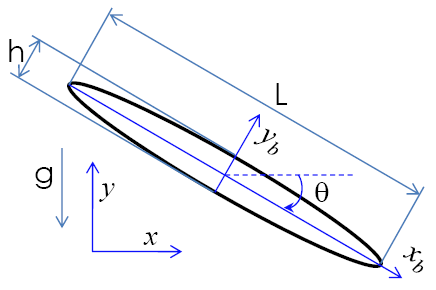
A freely fallng body
For a plate falling in fluid, the problem can be determined by initial inclination angle, and three nondimensional parameers, i.e., the Reynolds number Re, the Froude number Fr (related to the density ratio between body and fluid), the body thickness ratio AR. For a thin body, depeonding on Re and Fr, falling trajector is usually categorized by one of thte following motion:
Steady fall
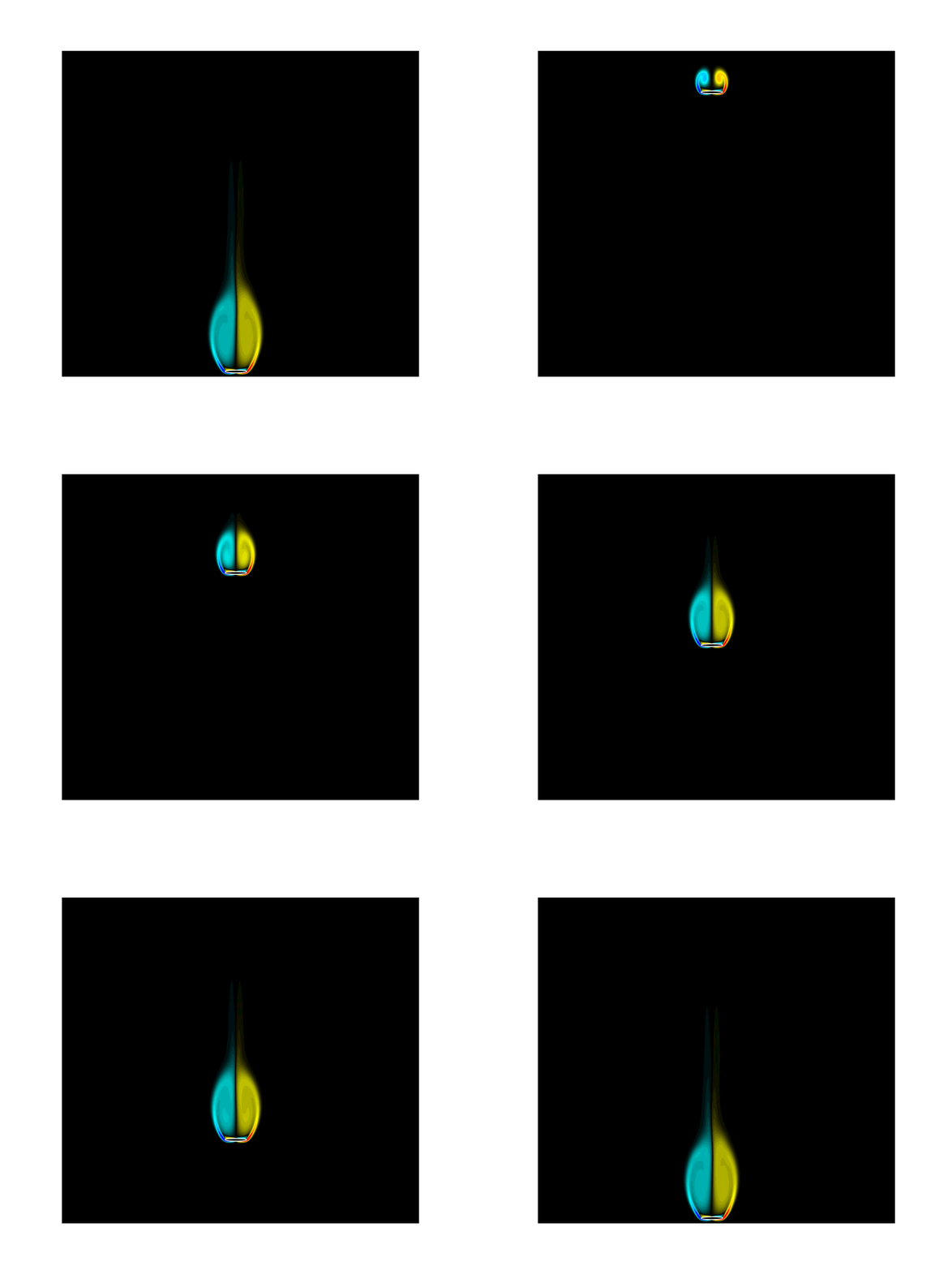
Steady fall

Falling velocity
Flutter
For a body with relatively small Froude number (smaller density ratio between the body and the fluid), the flutter motion will be developed once the body is released from rest. In the following demonstration, Re = 220, Fr = 0.45, AR = 0.125, the initial inlcination angle is 45 degree. In the butterfly shape phase plot consisted of veloicty components u and v, two bodies with different initial inclination angle is presented. One is 45 degree (black); the other is 75 degree (blue). The bodies with different initial inclination angle go through various transient process, but end up to basically same limit cycle, i.e., the same flutter motion.
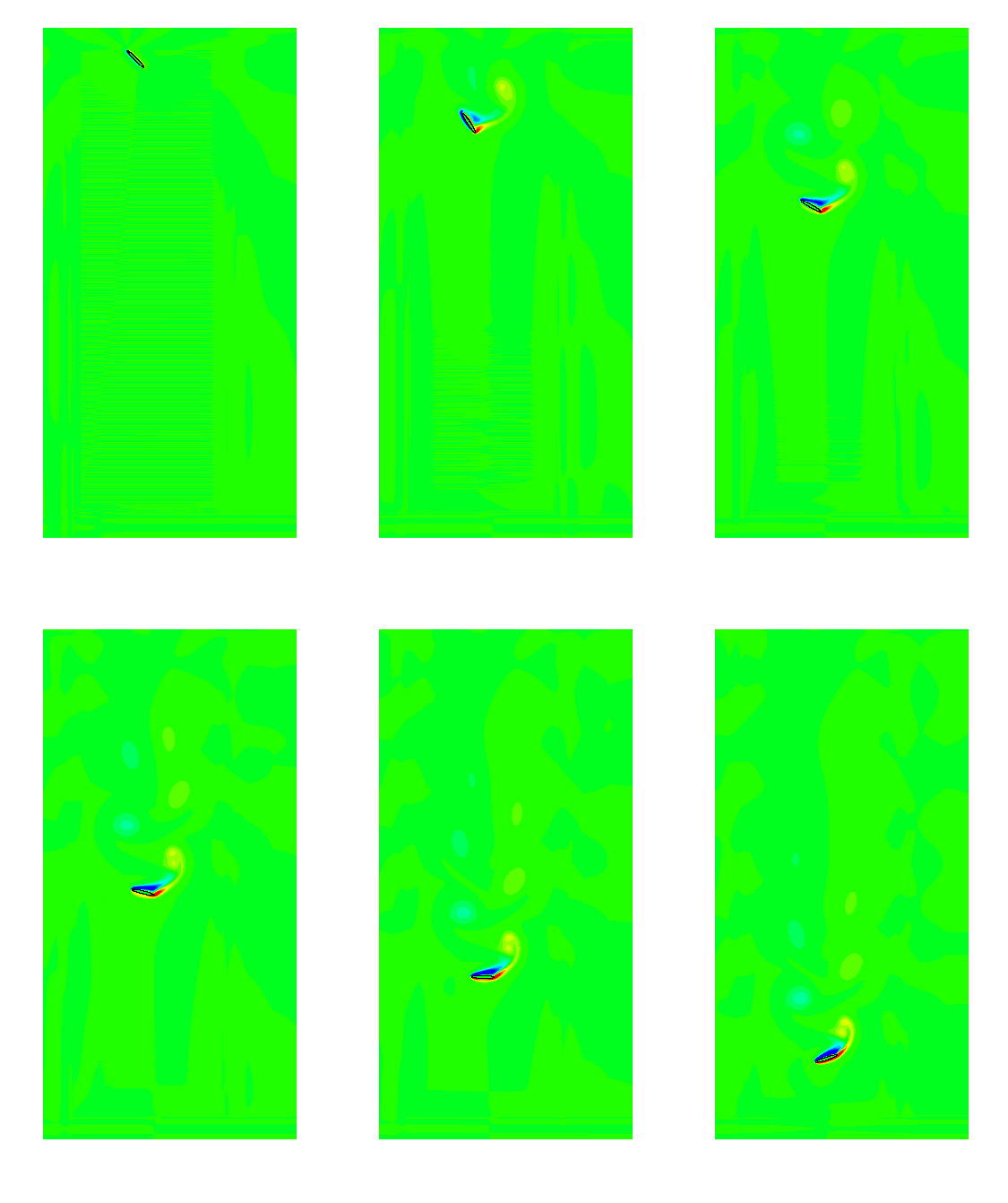
Vortex development in flutter motion

Trajectory of the flutter plate

Phase plot
Tumble
For a body with relatively high Froude number (big density ratio between the body and the fluid), after release, the tumbling motion is developed, as shown in the following figures, in which Re = 1750, Fr = 0.9, AR = 0.125. The tumbling motion is composed of gliding and turning motion. In the phase plot, the body eventually will develop a cicuclar shape limit cylce.
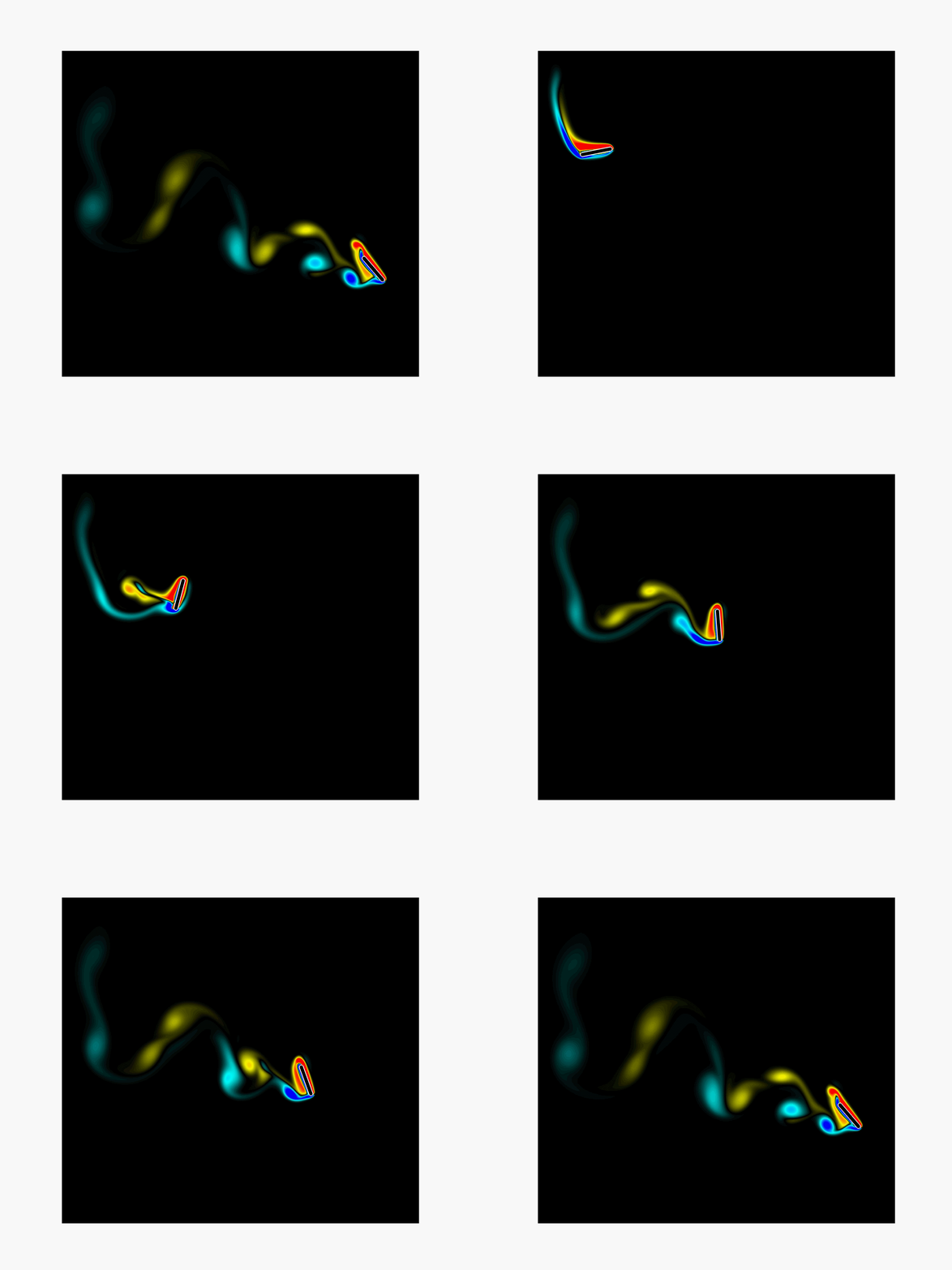
Vortex development in tumbling motion
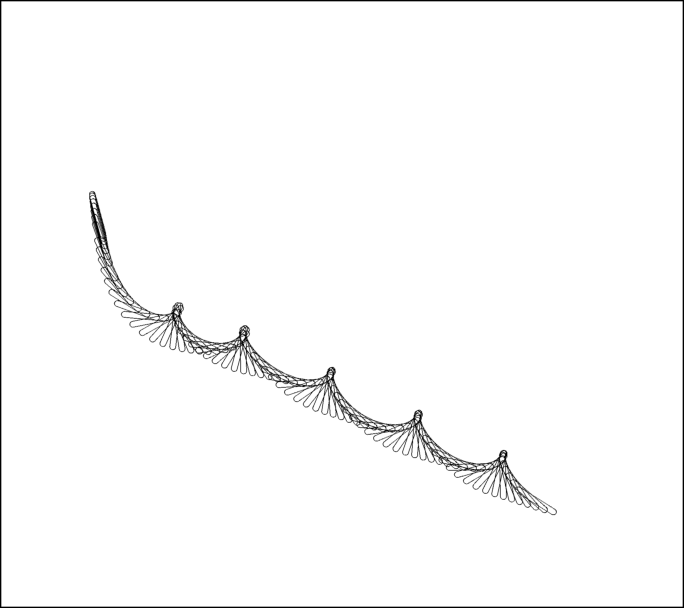
Trajectory of a tumble plate

Phase plot
Flutter-Tumble
For a body with intermediate Froude number, it could present both flutter and tumble in the falling process. In the demonstration, Re = 420, Fr = 0.56, AR = 0.125. The body flutters as it falling, but in each half cycle of flutter, it tubmles once.

Vortex development in flutter-tumble motion
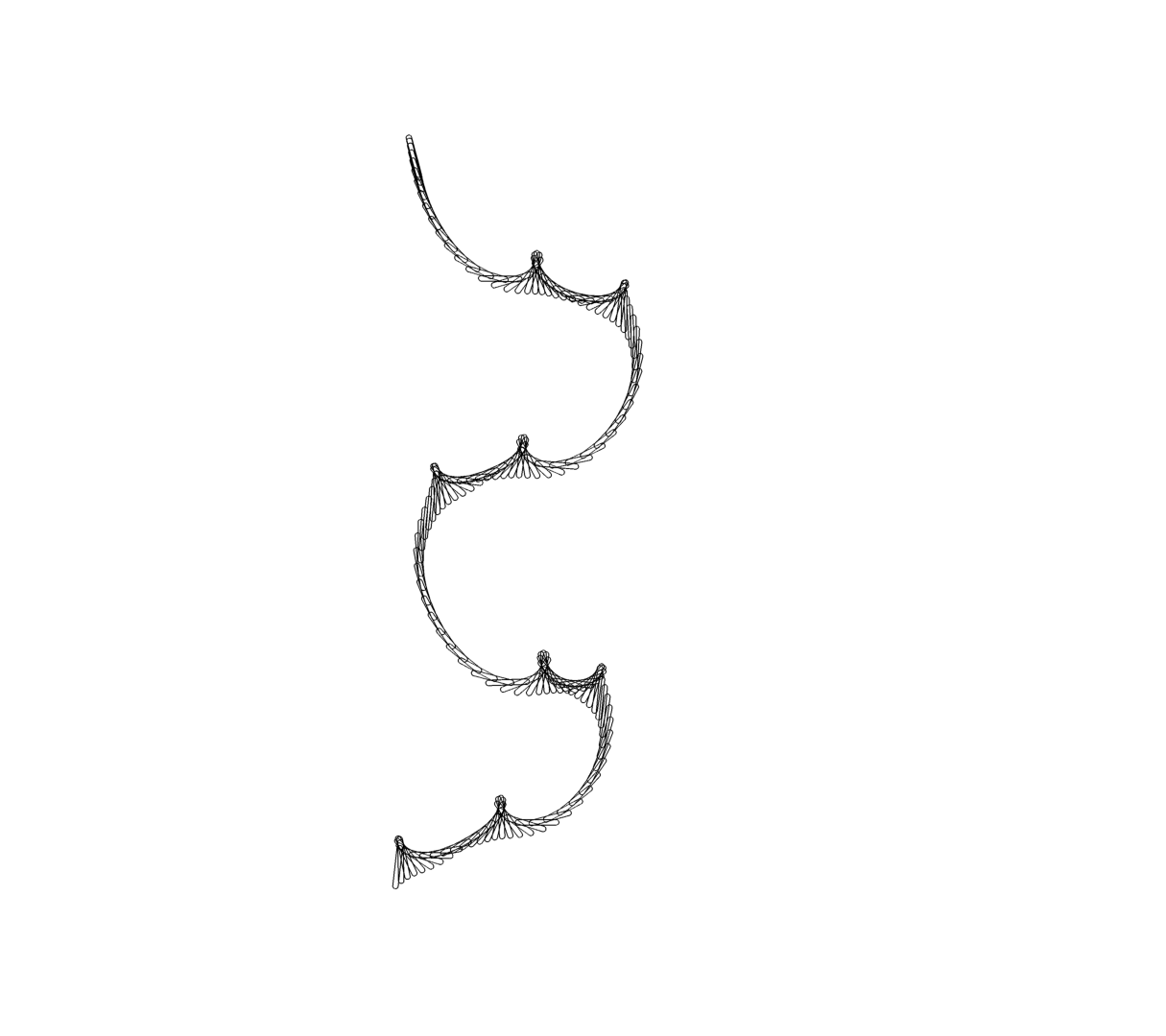
Trajectory of the flutter-tumble plate
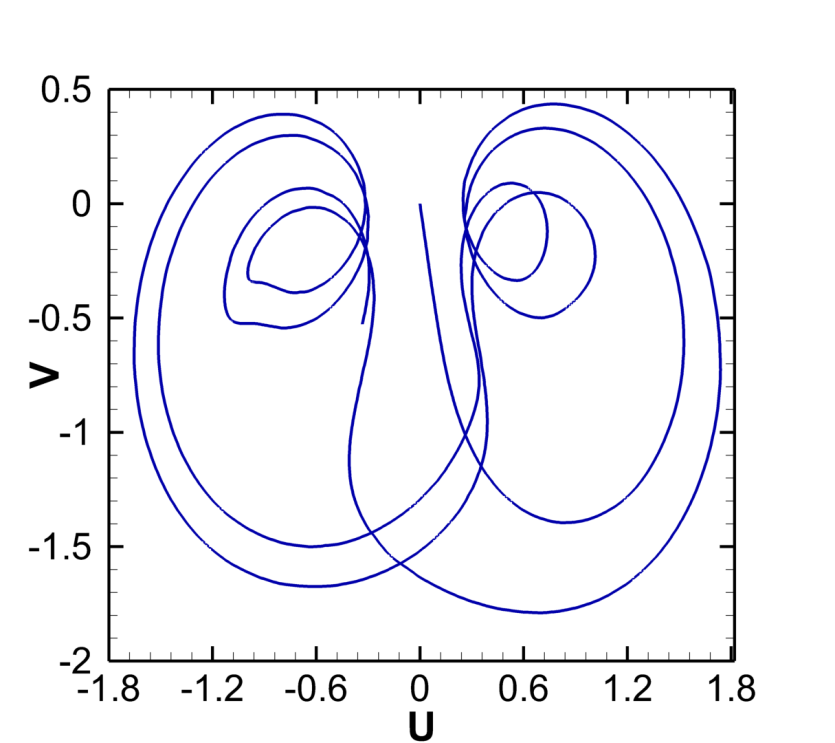
Phase plot