VIV suppression
Vortex-induced vibration (VIV) of structures is of practical interest to many engineering fields such as aerospace and mechanical systems. Here we studied the thermal effects on vortex-induced vibration. We found that the amplitude of VIV can be reduced as the thermal control parameter Richardson number (Ri) increases, or even be fully suppressed when Ri is above a critical value. A drag reduction of 30%-40% can also be achieved at the critical Richardson number
Suppression of a single body
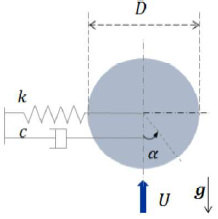
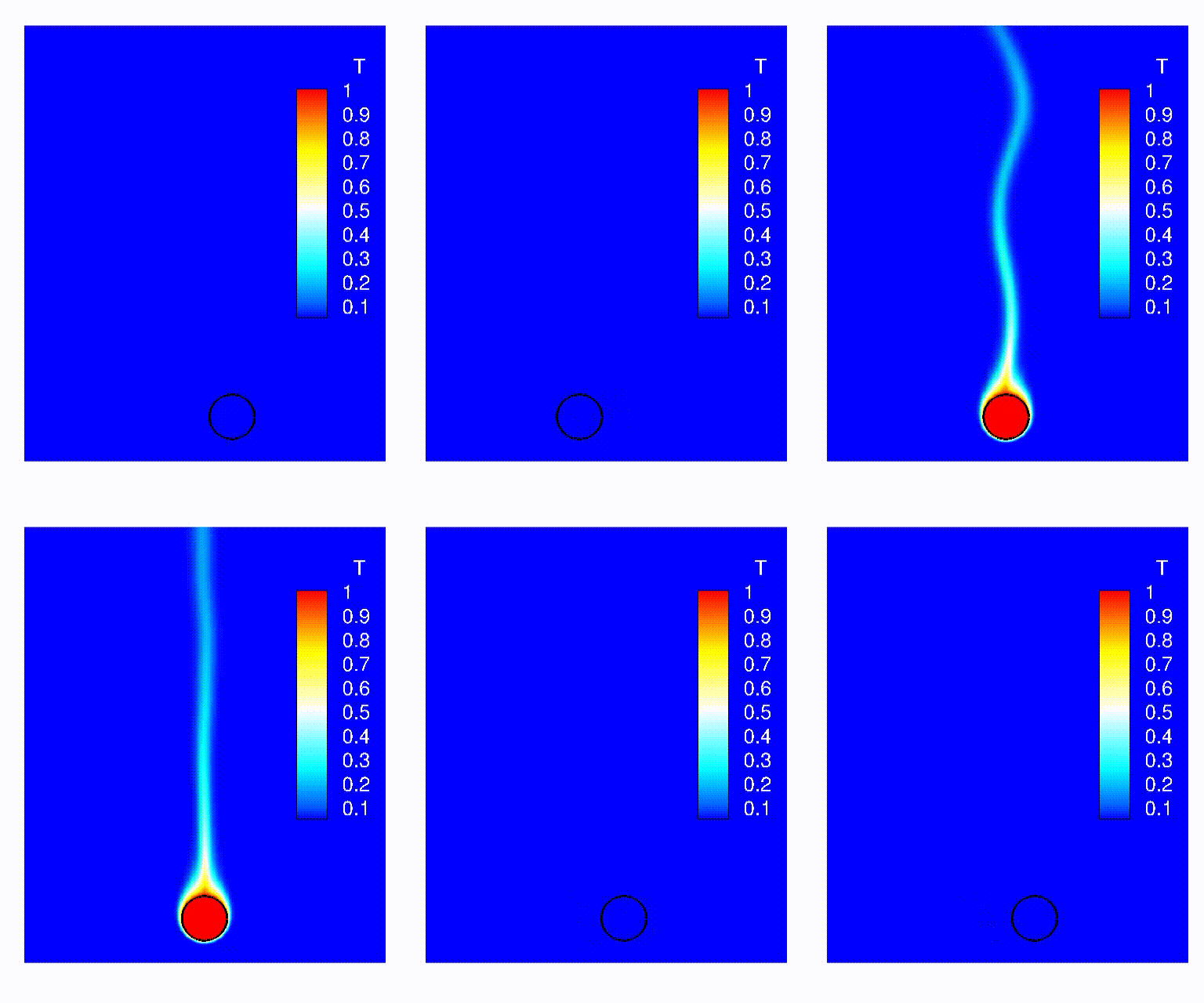
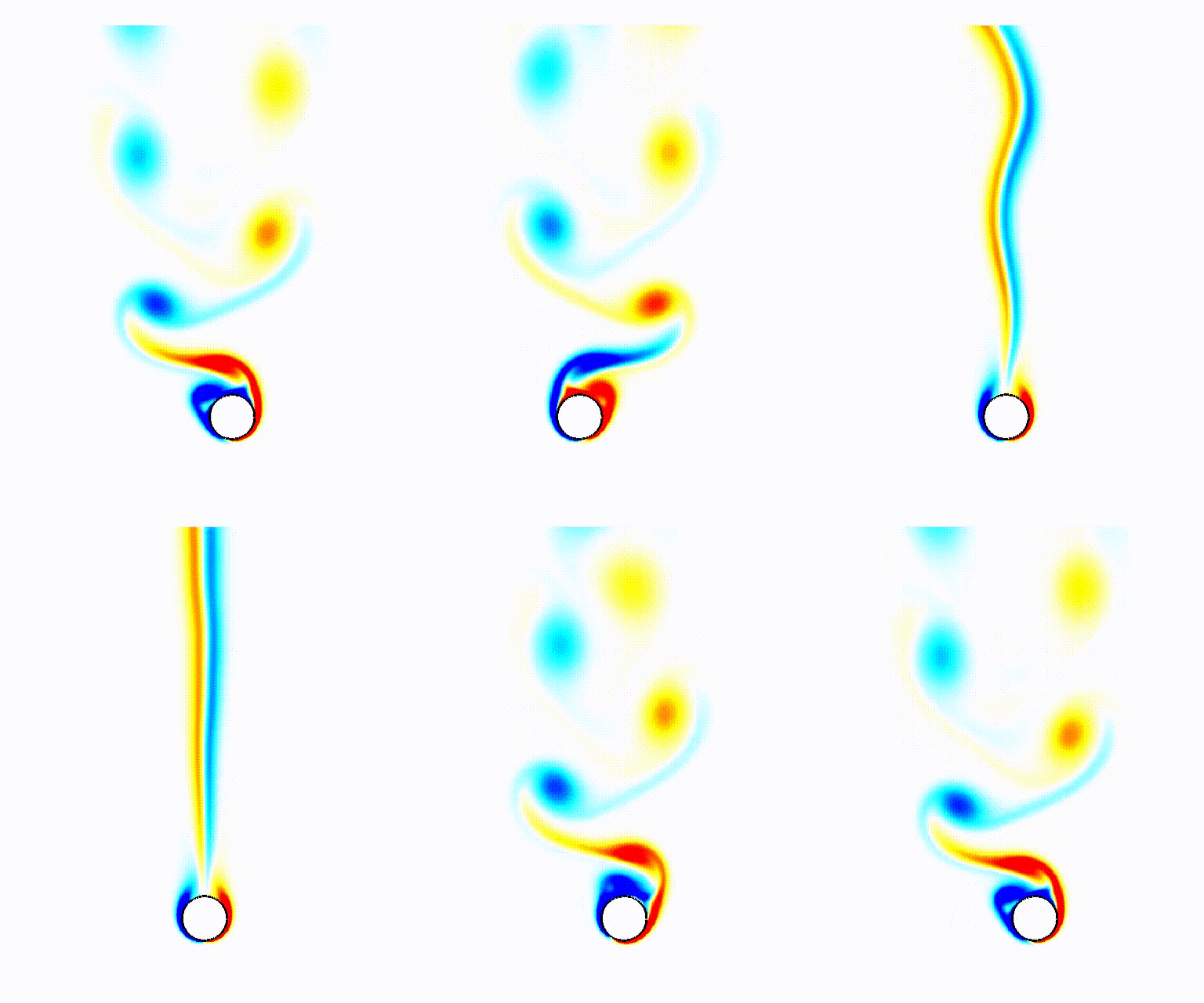
Vortex sheeding is suppressed by increasing the temperature of the body.
Multiple bodies control
We have also used thermal and proximity effect to suppress VIV of multiple bodies.
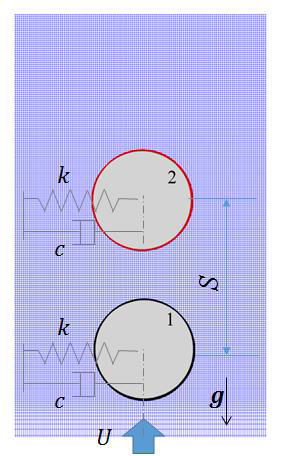
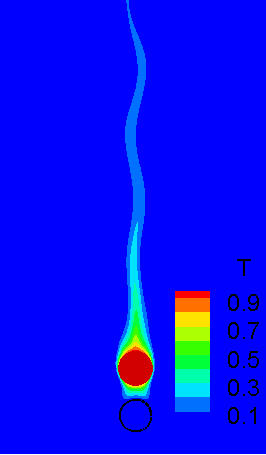
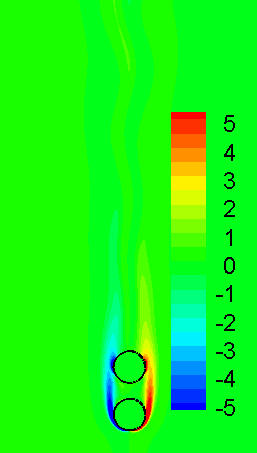
Here we studied flow past two tandem bodies. When the separation between the two bodies is close enough, e.g. 1.5D between the two body centers where D is the diameter of the cylinder, then the vortex shedding from the first body can be suppressed due to the proximity effect. In other words, there is no enough space for the vortex developing and shedding from the first body. Therefore, if the temperature of the second body is raised up and the vortex shedding is suppressed, then the vibration of both cylinders are suppressed.