Sang-Yoon Chang
Research Projects
My research is in the area of security of networked systems with a focus on wireless and mobile systems.
I am interested in bridging theoretical insights and systems implementation to design practical security solutions.
I share my research areas in this page. Most of these projects are ongoing.
Medium access control against insider denial-of-service
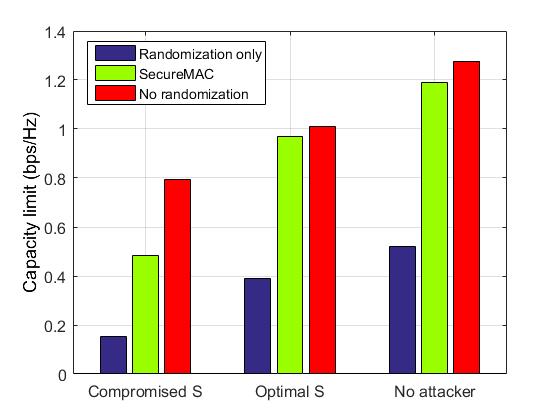
When multiple transmissions coexist and the channels overlap, the transmission signals interfere with each other. To reduce such interference and establish high-volume traffic links between hosts, systems have been using medium access control (MAC) protocols to enable the network users/antennas to coordinated with eac other before transmitting data. Unfortunately, traditional MAC assumes user collaborations and does not work well when misbehaving users compromised the network and deviates from the protocol, in which case, the state-of-the-art is to disable MAC and choose the Nash equilibrium. I investigate the security vulnerabilities against insider denial-of-service (DoS) attackers and build resilient MAC designs that are effective even against such strong insider attackers.
Related publications at: ToN 2015 (earlier version at MobiCom 2012), CNS 2015
When multiple transmissions coexist and the channels overlap, the transmission signals interfere with each other. To reduce such interference and establish high-volume traffic links between hosts, systems have been using medium access control (MAC) protocols to enable the network users/antennas to coordinated with eac other before transmitting data. Unfortunately, traditional MAC assumes user collaborations and does not work well when misbehaving users compromised the network and deviates from the protocol, in which case, the state-of-the-art is to disable MAC and choose the Nash equilibrium. I investigate the security vulnerabilities against insider denial-of-service (DoS) attackers and build resilient MAC designs that are effective even against such strong insider attackers.
Related publications at: ToN 2015 (earlier version at MobiCom 2012), CNS 2015

Integrity protection for wireless channel access
Wireless channels are inherently shared by spatially coexisting users, and anybody equipped with the radio hardware and tuned into the spectrum can breach the integrity of the wireless channel by eavesdropping and injecting signals. In addition to studying the traditional cryptographic approaches, I offer novel solutions that build protection at the radio frontend, so that the security is no longer reling on the computation bound of the computing devices at the backend. I also research in physical-layer security to use the dynamic fluctuations in channel characteristics for security.
Related publications at: Q2SWinet 2015, MobiWac 2013, ICC 2011
Wireless channels are inherently shared by spatially coexisting users, and anybody equipped with the radio hardware and tuned into the spectrum can breach the integrity of the wireless channel by eavesdropping and injecting signals. In addition to studying the traditional cryptographic approaches, I offer novel solutions that build protection at the radio frontend, so that the security is no longer reling on the computation bound of the computing devices at the backend. I also research in physical-layer security to use the dynamic fluctuations in channel characteristics for security.
Related publications at: Q2SWinet 2015, MobiWac 2013, ICC 2011
Transportation network security
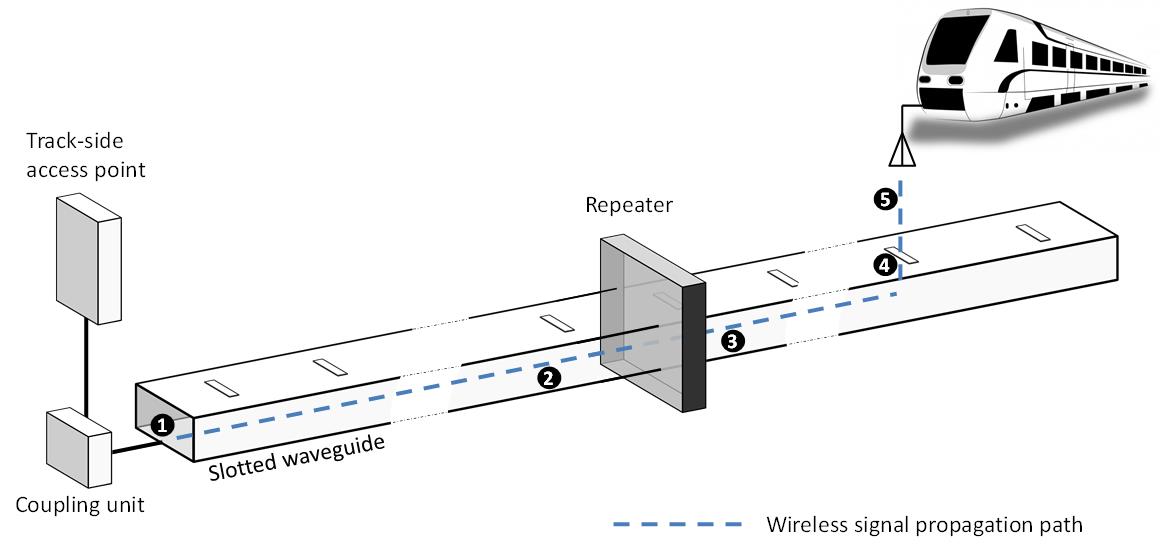
Vehicles are mobile by design and thus use wireless communications. I study the security in two different applications. First, train applications offer unique challenges and advantages because of the restricted mobility pattern of train operations (e.g., they operate on rail tracks); I study the communication systems for train applications and secure the availability of such systems; I am actively collaborating with real-life train operators and system integrators to better understand the system requirements and bridge my research into real-life implementation. Second, I am investigating the security of vehicular ad hoc network (VANET) for car applications; in specific, I am working on the credential/certificate management system which can act as a root of trust for VANET security and privacy.
Related publications at: SecureComm 2016, ICPADS 2015 (invited)
Project page for public transportation security
Vehicles are mobile by design and thus use wireless communications. I study the security in two different applications. First, train applications offer unique challenges and advantages because of the restricted mobility pattern of train operations (e.g., they operate on rail tracks); I study the communication systems for train applications and secure the availability of such systems; I am actively collaborating with real-life train operators and system integrators to better understand the system requirements and bridge my research into real-life implementation. Second, I am investigating the security of vehicular ad hoc network (VANET) for car applications; in specific, I am working on the credential/certificate management system which can act as a root of trust for VANET security and privacy.
Related publications at: SecureComm 2016, ICPADS 2015 (invited)
Project page for public transportation security
Body area network security
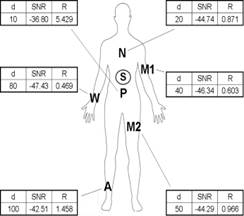
Body area network is comprised of implantable or wearable devices that are in physical contact with the human user's body. Against remote attackers, I investigate the security implications of human body physiological values and the power-based denial-of-service (DoS) vulnerabilities. My work in same-body key establishment involves experimental analyses with human bodies (passive measurements) and dead mouse (active measurements).
Related publications at: HealthSec 2012
Body area network is comprised of implantable or wearable devices that are in physical contact with the human user's body. Against remote attackers, I investigate the security implications of human body physiological values and the power-based denial-of-service (DoS) vulnerabilities. My work in same-body key establishment involves experimental analyses with human bodies (passive measurements) and dead mouse (active measurements).
Related publications at: HealthSec 2012
Others: Wireless Charging & Network Layer
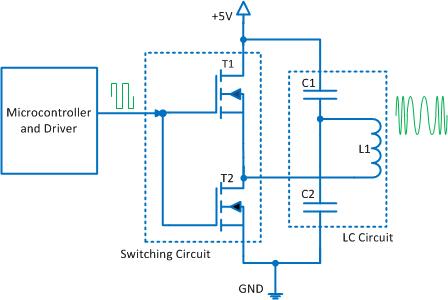
I am interested in bridging information transfer and power transfer and using wireless charging to provide greater security assurance and mitigate energy-based denial-of-service attacks. I am also extending my work to the network layer. I am specifically interested in wireless ad hoc network (to build a cross-layer solution for network resiliency) and SDN security.
Related publications at: NOMS 2016, ICNC 2016
I am interested in bridging information transfer and power transfer and using wireless charging to provide greater security assurance and mitigate energy-based denial-of-service attacks. I am also extending my work to the network layer. I am specifically interested in wireless ad hoc network (to build a cross-layer solution for network resiliency) and SDN security.
Related publications at: NOMS 2016, ICNC 2016